Rapid Transfer Ports and EU GMP Annex 1
A key element of contamination control
A rapid transfer port (RTP) supports contamination control by creating a protected route for materials to enter or leave a barrier system. Its contribution to EU GMP Annex 1 compliance depends on the complete transfer process: how materials are prepared, how the Alpha and Beta components connect, and how the transfer is performed and verified.
For engineering, production and quality teams, the practical question is therefore not simply which port to install. It is how to demonstrate that each transfer preserves the conditions required by the process.
How do RTPs support EU GMP Annex 1 objectives
EU GMP Annex 1 identifies material transfer as a significant contamination risk. Section 4.11 includes rapid transfer systems for isolators among the approaches that may be used when sterilization during transfer is not possible, provided the procedure is validated. Section 4.18 addresses transfer technologies for both isolators and RABS. These provisions sit within the wider Contamination Control Strategy (CCS) described in section 2.3. Read EU GMP Annex 1.
A RTP is one part of that strategy. Its value is strongest when the transfer route is defined from material preparation through to the point of use, with clear responsibilities at every interface.
How an Alpha Beta rapid transfer port works
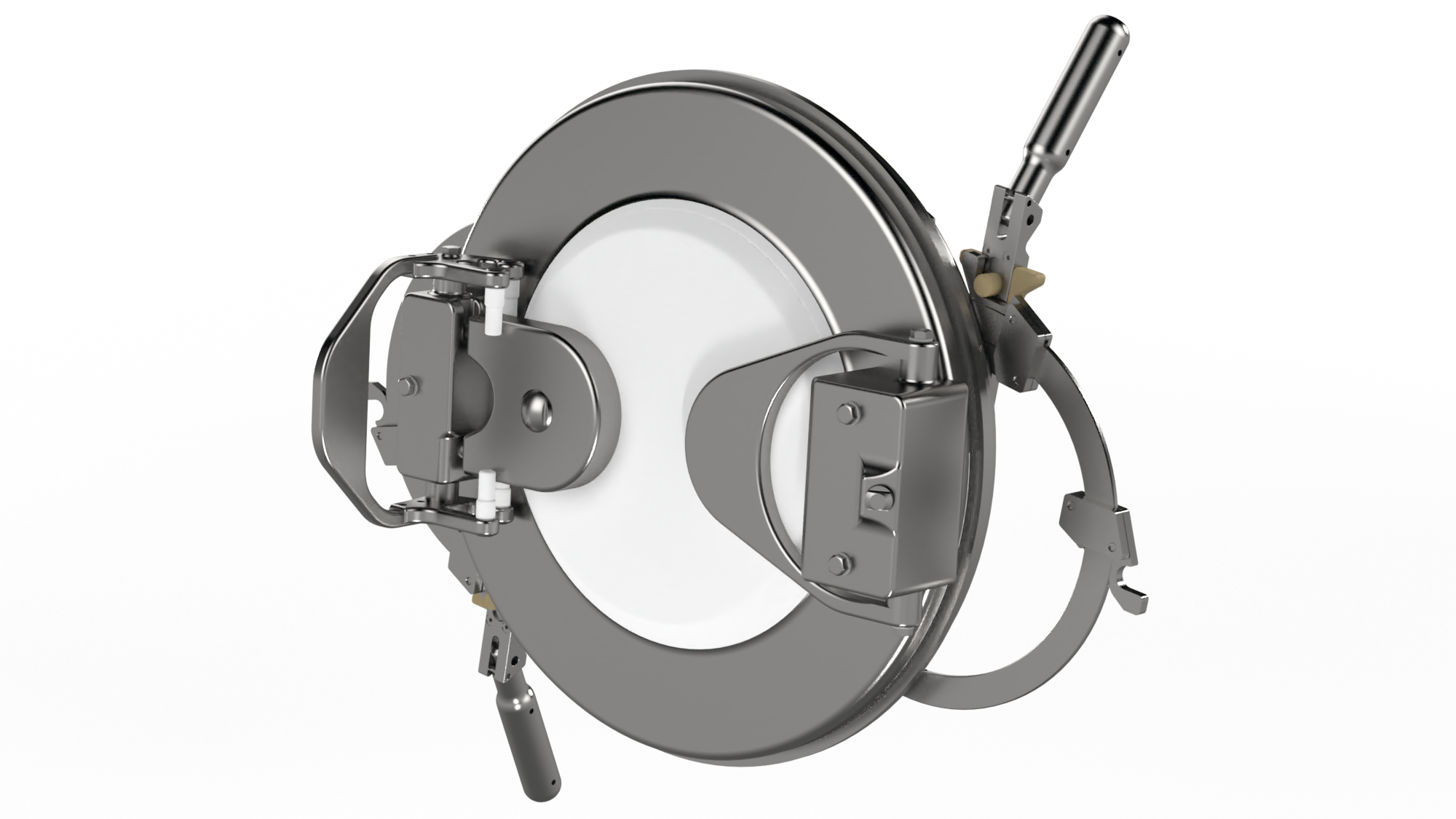
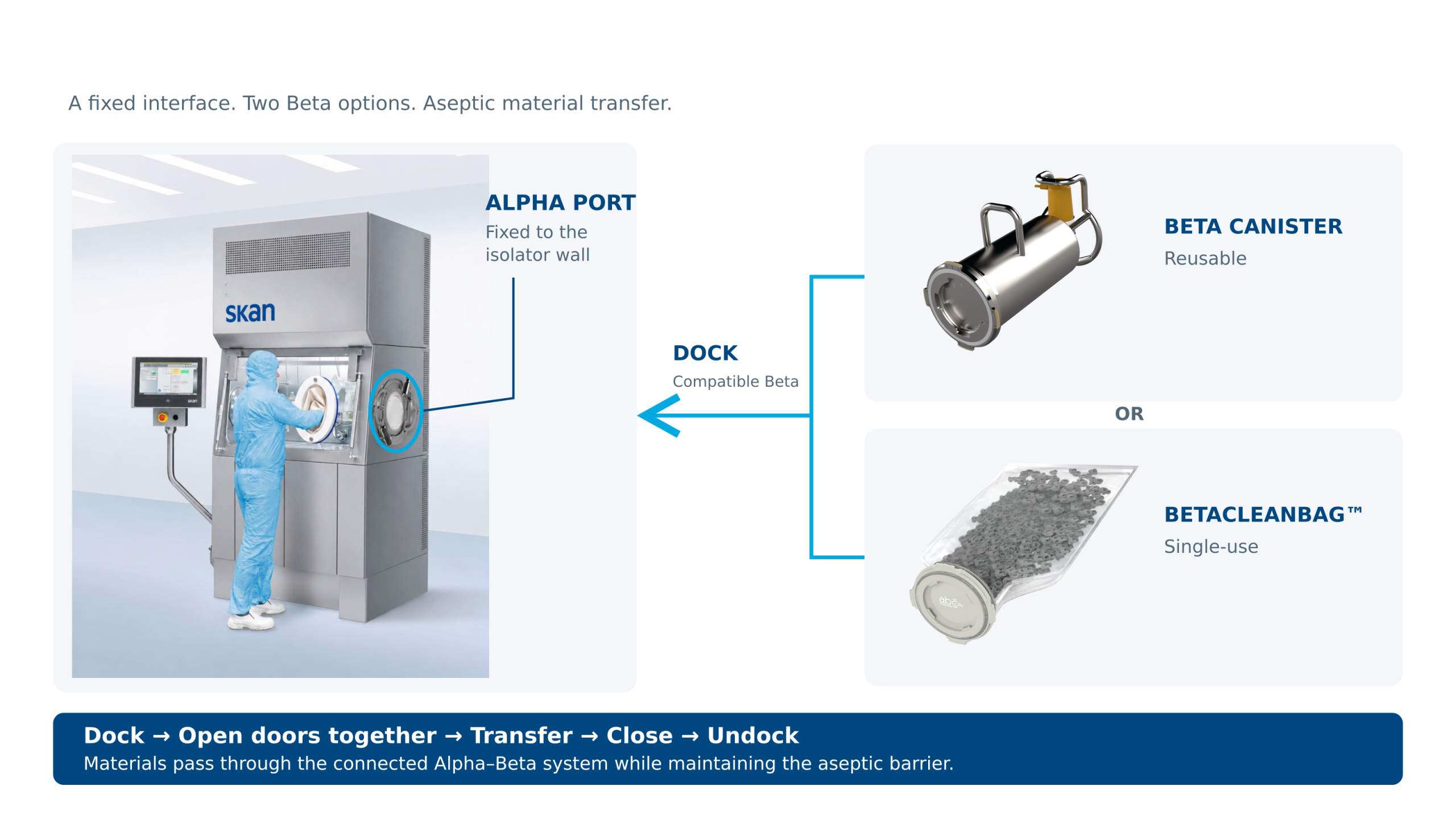
A conventional RTP combines an Alpha assembly installed in the barrier wall with a Beta assembly attached to a transfer container or bag. Docking couples the two doors so they can open together while their externally exposed faces remain enclosed between them. Seals and interlocks help control the connection and opening sequence.
This arrangement provides a route for transfer without opening the main barrier doors. It does not sterilize the contents. The required microbiological condition of the load must be established before transfer and maintained through storage, transport and use.
Assess the interface as carefully as the contents
One area requiring particular attention is the narrow junction around the coupled doors, often called the ring of concern. Depending on the design and preparation of the system, this interface can present a contamination pathway if transferred items contact it.
A useful design review follows the actual path of the load. Can a flexible bag sag towards the interface? Could a tool touch the opening as it is withdrawn? Does a component bridge, chute or protective sleeve offer an appropriate control for this application? Such accessories also need a defined preparation method and a usable installation sequence.
Reducing the size of a potential contamination zone is helpful, but the decisive question is whether the proposed handling method controls contact under realistic operating conditions.
Translate the CCS into a transfer specification
A practical transfer specification should connect each identified risk to a design feature, an operating instruction and supporting evidence. The following questions help teams make that connection.
Define the load and its preparation
List the materials, dimensions, weight and transfer frequency. Identify the required sterilization or surface bio-decontamination approach and confirm that it is suitable for both the item and its packaging. Treat surface treatment and sterilization of the contents as distinct operations. Include storage conditions, hold times and handling before docking.
Assess the complete Alpha/Beta combination
Record the exact port, Beta flange, seals, bag or container and accessories intended for use. Matching nominal diameters alone is not sufficient evidence of suitability. Review docking, sealing, interlock operation and the transfer path together. For combinations from different suppliers, define the evidence required for the particular pairing and application.
Make the routine sequence easy to perform
Evaluate mounting height, visibility, docking force, container support and operator reach. A sequence that works with an empty container may be difficult with the maximum intended load. Trial the real handling conditions, including gloved operation, before finalizing the layout.
Plan the response to abnormal conditions
Specify what happens if a connection cannot be completed, a seal appears damaged, a bag is dropped or an item becomes stuck. Operators need a clear stopping point and an approved recovery route. Resolving these situations during design is more effective than improvising during a production batch.
Demonstrate performance in the installed process
Supplier documentation provides a starting point. Site-specific evaluation should establish how the selected assembly performs with the intended loads, preparation methods and operating sequence. Useful evidence can include functional checks of interlocks, suitable integrity testing, assessment of the material path and trials of difficult handling conditions.
For an integrity test, define the test boundary and what the result demonstrates. Testing a canister, a bag or an assembled connection does not necessarily answer the same question. Acceptance criteria and test frequency should reflect the equipment design, intended use and identified failure modes; a successful test does not establish the sterility of the contents.
The process review should also consider how transfers affect airflow protection, how relevant manipulations will be represented during aseptic process simulation, and which maintenance or consumable changes could require reassessment. This creates a traceable link between the selected hardware and its actual use.
Benefits for isolators and RABS
In an isolator, a suitable RTP can provide a defined route for replenishment while the main enclosure remains closed. In a Restricted Access Barrier System (RABS), it can serve a similar material-transfer purpose where the barrier design accommodates it. The receiving area, operator movements and internal handling route still need to be assessed as an integrated system.
ABC Transfer® offers Alpha Ports with internal or external opening options and Betacleanbags™ for single-use transfer applications. External operation can reduce the need to reach inside the barrier to operate the port. The selected configuration should be evaluated against the process, load and installation requirements.
FAQ: Rapid Transfer Ports & EU GMP Annex 1
Does a RTP make a process EU GMP Annex 1 compliant?
No. A RTP supports a controlled transfer route. Compliance depends on the facility, equipment, process controls and evidence supporting their combined performance.
Does docking sterilize the transferred material?
No. Docking connects the transfer assemblies. It does not replace the preparation needed to establish the required condition of the materials and transfer system.
What should be reviewed before selecting a Beta bag?
Start with the load, preparation method, packaging integrity, intended Alpha pairing and handling sequence. Confirm the suitability of the exact bag reference for the application.
Discuss your transfer requirements
Planning a new transfer route or reviewing an existing installation? Explore ABC Transfer® Alpha Ports and Betacleanbags™, then discuss your materials, preparation method and integration constraints with our team.
Contact us